WHY IS GENDER SENSITIZATION NECESSARY AT THE SCHOOL LEVEL?

The true purpose of education
I believe that education or schooling is a process through which society creates the kind of individuals we wish to see in the world. Hence, it’s imperative that school curriculum lays strong emphasis on inculcating values of equality, inclusivity and diversity, all of which are essential for building a healthy society.
Change must begin from a young age
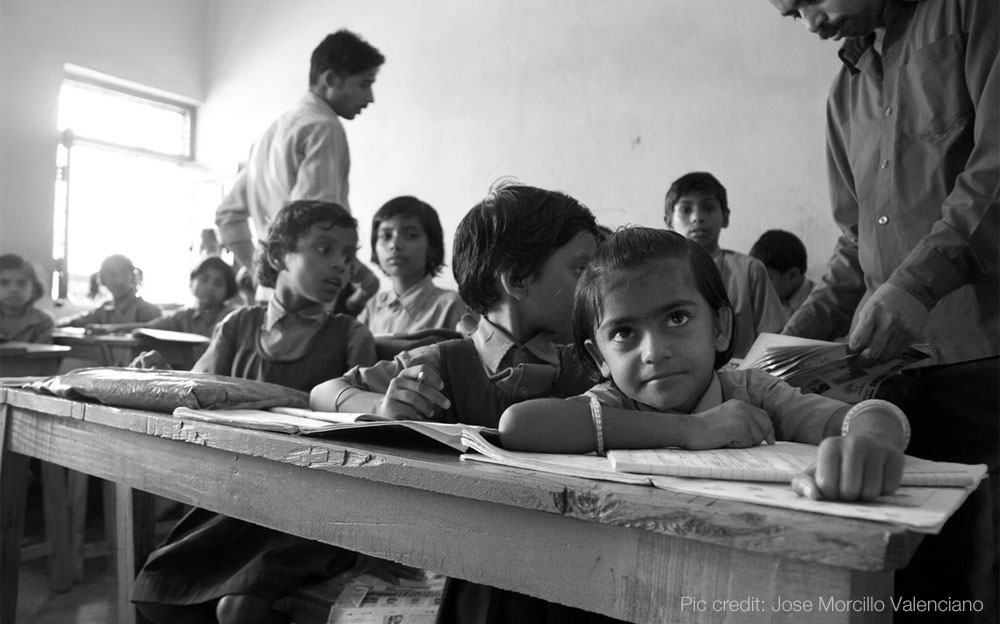
In a patriarchal country like India, where stark gender roles, overt gender discrimination and devaluation of women and girls is ingrained into our daily lives, I feel that it is extremely important to identify and address this problem from a very young age. Boys and girls start developing their gendered identities from birth. The upbringing at home also influences them. While egalitarian gender roles may not be present at home, the school can become a space of transformation where children, especially those hailing from disadvantaged backgrounds, learn to question gender roles, identify areas of gendered discrimination, and work towards changing them.
Change has to start from the grassroots
In many families, in both rural and urban areas, while boys are encouraged to study and have a career, girls are taught to concentrate on household chores. Only when both boys and girls learn to question this typical gender bias at school, will the situation at home also change for the better.
The different geographical and cultural contexts I have had the opportunity to work in has taught me that gender roles and inequalities are very contextual, and rooted in cultural and social practices. Thus, to have a national policy addressing gender equality is not sufficient. At a more local level, we need clear directives to understand and address specific gender norms through the schooling process.
In spite of our efforts towards providing education to a girl child, where exactly are we lacking?
For the longest time, we have been working on bringing girls to school and ensuring that they complete their schooling. We assume that schooling and academic ability will empower a girl through financial and social independence. Why then, do we still have a society where women and girls fear for their safety and well-being, and are considered ‘burdens’ on their families? We may have been able to bring women to the forefront, but without addressing and challenging gender norms at a nascent stage of social development, we cannot hope to work towards a society where women and girls feel safe and valued.
Imperative to this process is the need to working with boys. From a young age, i.e. through schooling itself, if boys are taught to understand how an egalitarian society is beneficial for all by questioning gender norms, only then will boys learn to treat women as equals. Thus education can play a critical role in making the society safer for women, and that can happen by making gender sensitisation a part of the school curriculum.
If the Government policy also outlines the importance of gender sensitisation, why shouldn’t it be made mandatory?
The importance of gender sensitisation in schools has been recognized and given due importance in all policy outlining quality education. The Right to Education Act 2009, and its operating arm, the Sarva Shiksha Abhiyan,has clearly mentioned that gender equality is one of the expected outcomes of elementary education in the country. Schools need to address unequal gender roles at a critical stage, when children are growing up. Shouldn’t we insist that schools give due importance to gender sensitization and ensure that it is very much a part of our children’s schooling process?
If you want to see a society devoid of discrimination, one where women and girls are not treated as inferior, and where equal opportunities and rights are given to all women, then I urge you to sign this petition, emphasize on the importance of gender sensitization and do your part to ensure that over time, we move towards a more equal and inclusive society.
CREATING SAFE SPACES FOR OPEN CONVERSATIONS & MORE
To end violence against women, you first have to name it, know it, and recognize its many forms as an unacceptable assault upon the dignity of women and all society.
I am a facilitator at an NGO called Seeds of Awareness. We hold sessions on sexual health at different low-income schools across Mumbai. For several years we have been trying to understand the complexities of this situation, and the best way to handle it.
Inaccessible and Stigmatised – Sex Education
Sex Education is relatively inaccessible in many parts of India. Currently, almost half of Indian population is within the age group of 18-35 and the majority of the crowd do not have access to correct information about sexual health. Plus, sex is stigmatized in our society, even if the youth want to seek help there is no place they can go to. And thus, they resort to seeking information from other avenues like watching pornography.
Is Sex Education Gender Sensitisation?
A lot of times there’s apprehension and confusion among parents, teachers, schools and even children on what gender sensitisation really means. While sexual health and knowledge empowers children, it’s also crucial to look at psycho-social conditioning and biases that are developed among children from an early age. It’s important to address behavioural patterns and perspectives, that enable children to develop a healthy attitude towards both their own sex and the opposite sex.
Mixed Messaging – A thin line between romance and crime?
The youth of India pick up a lot of mixed messaging from the media, the society and their friends. Hence, they are already confused. They think that following a girl and harassing her would make her fall in love. Youth also end up resorting to violence (rape, molestation, voyeurism, human trafficking, child sexual abuse etc.) as there is no place to have an open conversation.
Conditioning and gender bias
During our childhood years, we are told that a girl and a boy has a set of spoken/unspoken rules - this leads to discrimination on so many levels. If we are to concentrate on sexual health, then we are conditioned to believe that a girl should never ask for sex or be caught dead buying a condom. There are still parts of India where women and sometimes men do not have rights over their own sexual-reproductive health.
Social media and internet
Thanks to technology, the youth today has access to a lot of explicit content (read: pornography). This leads to exploration and experimentation without the safety blanket of gender sensitisation, which could go horribly wrong.
Reaching Out and Making a Difference
Until now we have been able to work with over 2000 children in about 15 schools in Mumbai, and the response has been phenomenal. We use Bollywood/Hollywood videos, dance movement therapy, sharing circles and many activities to make the sessions very interactive and spread awareness about feelings, communication, gender, stereotyping, body image, sexual / domestic violence, consent, sexuality, social media, along with anatomy and reproduction.
The children initially are in shock, but are later receptive and want us to do sessions for their parents too. These formats of gender sensitization initiatives go a long way in reducing violence against women and enable children to grow into individuals who take informed decision that are healthy for them. However, for these initiatives to have the desired effect, it needs to reach out to each and every child in every nook and corner of India.
Hence, we urge you to join the movement for making gender sensitization compulsory in school curriculum, to pave the way for a better tomorrow.


